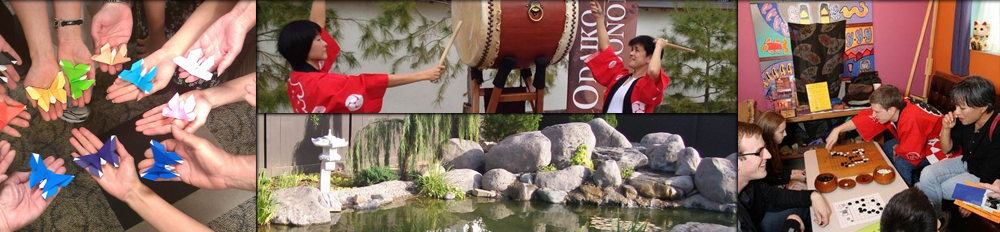
We are excited to invite you to our upcoming Japanese Study Abroad Fair next week.
Date: Thursday, November 5
Time: 3:30-5 pm
Location: Main Library, Rm112 (ILC), 1500 E.University Blvd. Tucson
“What to Expect:
Peer advice & experience sharing: Hear directly from our students who participated in study abroad programs in Japan (Arizona in Kyoto, Konan, Sophia, UA Tokyo, Internship in Tokyo, etc.) as they share their firsthand experiences and tips for living abroad.
JET program insights: Watch exclusive video letters from recent alumni currently living and teaching in Japan through the JET (Japan Exchange and Teaching) Program.
Advising & resources: Meet with a study abroad coordinator from the Study Abroad Office to learn about the application process and available scholarship opportunities.
Q&A session: Get your specific questions answered so you can confidently take the next step in your study abroad journey.
Light snacks will be served!
We look forward to helping you start your journey to Japan!”
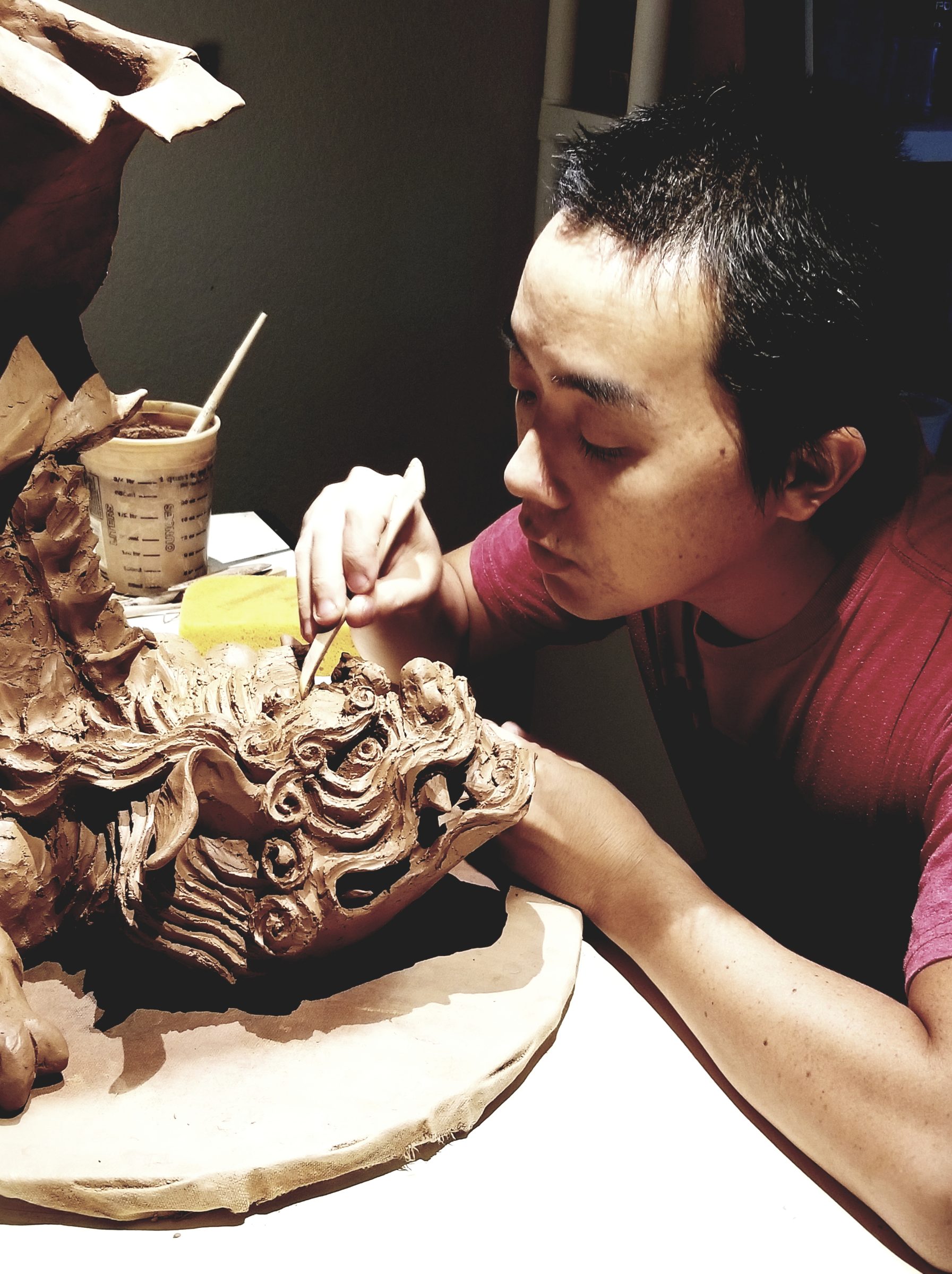
“Participants will create a hollow ceramic lantern inspired by Obon while exploring connections between Japanese Obon traditions and American Halloween customs. Each completed lantern will be glazed and fired and will be available for pickup approximately one week after the workshop. An LED tea light will be included.
Format: An introduction to Obon, the traditional Japanese festival honoring the spirits of one’s ancestors; a demonstration of ceramic lantern-making techniques; and guided instruction in creating and decorating a personal lantern.
instructor
Kazuma Sambe
Kazuma Sambe was born in New York in 1984 to a Japanese family. He moved to Japan with his parents at the age of four and was educated there. He later relocated to Tucson to study biochemistry. During this time, he encountered contemporary ceramics for the first time, an experience that led him to shift his focus from science to the field of art.
He earned a Bachelor of Fine Arts from the University of Arizona in 2011 and a Master of Fine Arts in Ceramics from Arizona State University in 2014. He currently resides in Tucson, where he continues his ceramic practice.
In addition to his artistic work, Sambe discovered a strong interest in the technical aspects of art production, including kiln maintenance, inventory management, and testing new ceramic recipes. He currently works as a Studio Technician in the Art Department at Pima Community College, where he supports classroom instruction.”
“The 13-string koto and bamboo shakuhachi flute have shaped Japanese musical tradition for centuries, becoming signature sounds of Japan. For our opening concert, please join us in the gardens for an evening of Traditional Japanese Music featuring distinguished koto artist Shirley Kazuyo Muramoto and local shakuhachi player Paul Amiel, performing classical repertoire in an intimate program of sound and stillness.
performers
Paul Amiel
Paul Amiel is involved in a variety of world music, playing gothic harp, Chinese guqin, Turkish ney, Ancient Greek Lyre, among others, and regularly performs with his Balkan duo Kyklo. He studied Kinko Ryu shakuhachi with Iida Katsutoshi in Nagoya, Japan, and founded the Empty Bamboo Shakuhachi Circle in Tucson in 2014.
Shirley Kazuyo
Shirley Kazuyo Muramoto, is a teacher and performer on the Japanese koto. Shirley received her Shihan with honors and DaiShihan master koto credentials from the Chikushi Kai in Fukuoka, Japan. She has expanded the repertoire of traditional koto music through her jazz fusion group, the Murasaki Ensemble, and in collaborations, arranging and composing music for the koto in various styles and genres. Shirley has performed across the U.S., Canada and Japan, collaborated with many artists and performed with amazing musicians, as well as performed for celebrity notables for over 60 years. For many decades Shirley researched Japanese traditional performance arts in the World War II concentration camps. In 2012, her project was awarded a National Park Service, Japanese American Confinement Sites grant to turn her decades-long research into a documentary film. Hidden Legacy: Japanese Traditional Performance Arts in the World War II Internment Camps premiered in 2014 and aired on public TV and PBS stations across the U.S. and universities here, in Japan and Europe. Recently it has received notice for use by the Smithsonian Folkways Recordings for K-12 classes. Shirley has performed and taught for 60+ years. In 2012, she was nominated to the Bunka Hall of Fame administered by the Hokka Nichibei Kai to honor those who have excelled and contributed to the culture of Japan and bettered relationships in our community, and a Taproot Fellowship from the Alliance for California Traditional Arts in 2024, numerous recognitions. Since the documentary came out Shirley continues to research and educate others in public schools, universities and community groups about this important and neglected history.”
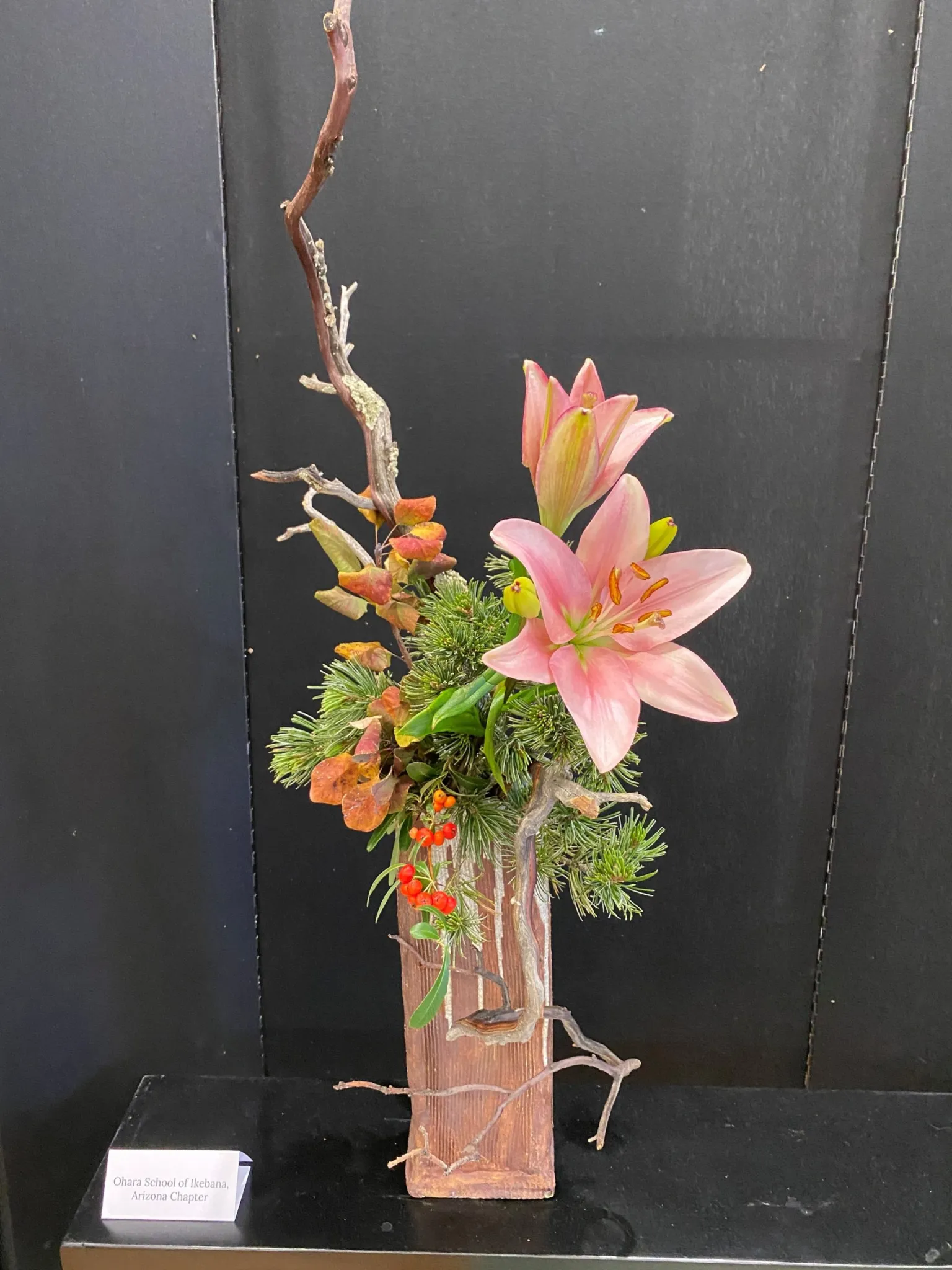
The Arizona chapter of the Ohara School of Ikebana is offering an Introduction to Ikebana workshop. Students will learn about the philosophy and art of Japanese flower arranging and create an arrangement. Vases and kenzan (frogs) will be available to borrow, and students will take the flowers home.
“The Community Foundation for Southern Arizona, in partnership with Tucson Tome Gnome and Tucson Spotlight, invites you to join the Solutions-Focused Community Book Club, a quarterly gathering for community members who care about Southern Arizona and want to learn together.
This book club brings people from different backgrounds into conversation around shared readings and real-world impact. You do not need to finish the book to participate. Guided questions will be provided, and open discussion is always welcome, making it easy to join whether you’ve read a few pages or the whole book.
The remarkable Tucson Tome Gnome and Tucson Spotlight will also host a community book-sharing table. Bring a few books from your RTS (ready-to-share) stack and take home something new to enjoy. Any remaining books will be added to CFSA’s Little Free Library, Dog Eared Books.
Together, we will explore ideas, listen to one another, and reflect on how what we are reading connects to our community. This is a welcoming space where curiosity is encouraged, diverse perspectives are valued, and everyone belongs.
Light refreshments will be provided.
Agenda October 27
5:15 – 5:30 PM: Registration and Check-In
5:30 – 5:35 PM: Welcome
5:35 – 6:45 PM: Small Group Discussion
6:45 – 7:00 PM: Wrap Up and Raffle
About the Book
Klara and the Sun by Kazuo Ishiguro
From her place in the store, Klara, an Artificial Friend with outstanding observational qualities, watches carefully the behavior of those who come in to browse, and of those who pass on the street outside. She remains hopeful that a customer will soon choose her, but when the possibility emerges that her circumstances may change forever, Klara is warned not to invest too much in the promises of humans.
In Klara and the Sun, Kazuo Ishiguro looks at our rapidly changing modern world through the eyes of an unforgettable narrator to explore a fundamental question: what does it mean to love?”
CFSA is at 5049 E. Broadway Blvd. Tucson. Easiest is to drive south on N. Rosemont Blvd. and turn west onto the campus before Broadway Blvd.